
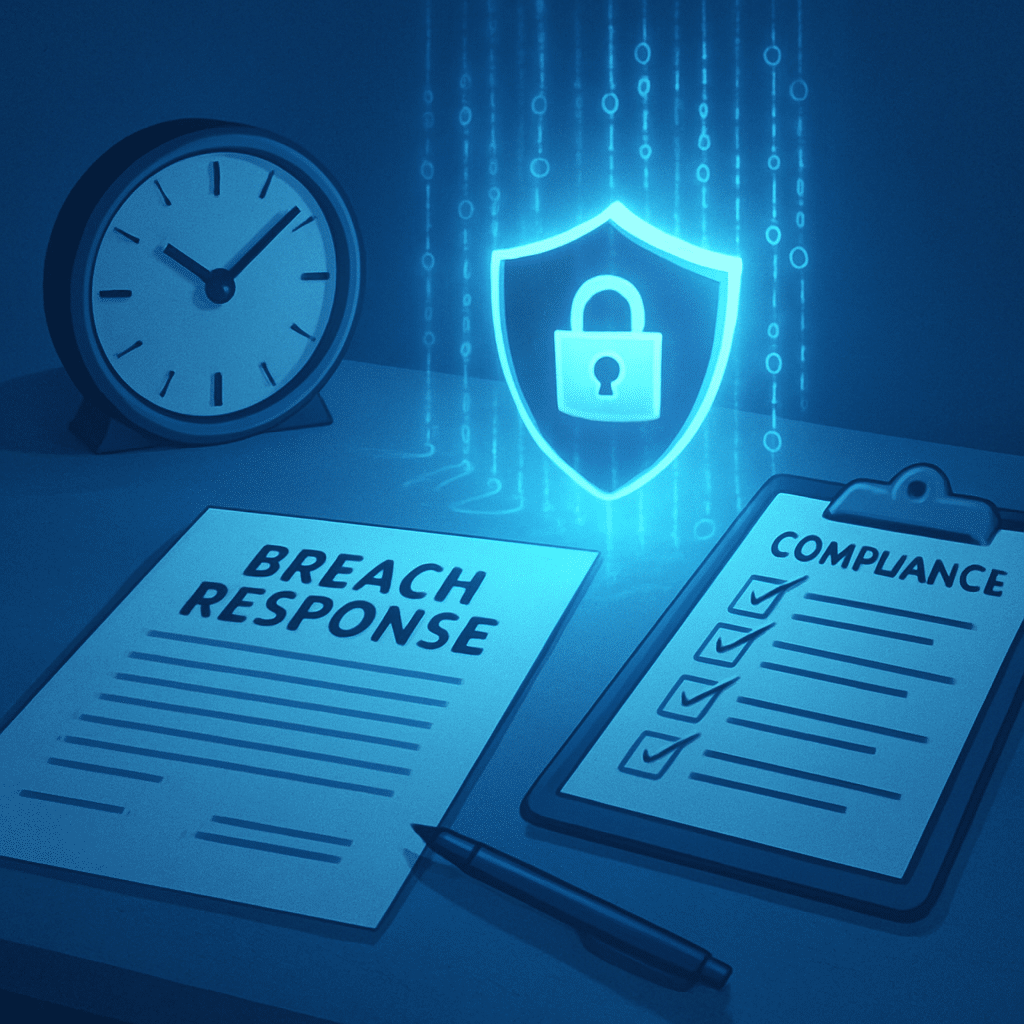
When a data breach hits a small business, the first hours determine the next months. Beyond containment and cleanup, there is a clock ticking on who you must notify, how you must report, and what you must document. This guide explains the legal, regulatory, and reporting steps after a breach so small businesses can act quickly, reduce risk, and meet obligations with confidence.

Table of Contents
- What Counts as a Breach and Why Reporting Matters
- Immediate Actions: Contain, Preserve, Assess
- Legal Triage: Determine Which Laws Apply
- Notification Obligations by Jurisdiction and Sector
- How to Notify: Content, Channels, and Timing
- Reporting to Regulators, Law Enforcement, and Partners
- Documentation and Recordkeeping
- Working with Insurers, Vendors, and Counsel
- Preventive Measures and Post-Incident Improvements
- Common Mistakes to Avoid
- Conclusion
- Frequently Asked Questions
What Counts as a Breach and Why Reporting Matters
In most laws, a breach means unauthorized access to or acquisition of personal data. Details vary by jurisdiction and by the type of information involved. For example, names plus financial account numbers or health details are often protected by law. Encryption may provide a safe harbor in some places, but only if the keys are not compromised.
Reporting matters for three reasons: legal deadlines, trust, and mitigation. Many frameworks require regulator and consumer notification on strict timelines. Proactive, accurate communication reassures stakeholders and reduces regulatory exposure.
Immediate Actions: Contain, Preserve, Assess
1) Contain the incident
- Isolate affected systems and accounts; revoke suspicious credentials; disable compromised APIs or integrations.
- Block known malicious IPs and cut off data exfiltration routes.
2) Preserve evidence
- Snapshot impacted systems and cloud instances; collect volatile memory if possible.
- Secure logs from endpoints, servers, network devices, identity providers, and SaaS apps. Increase log retention if short.
3) Assess scope and materiality
- Identify what data types were involved (for example, SSNs, driver licenses, payment cards, health data, credentials).
- Count affected individuals and determine their locations. Jurisdiction drives obligations.
- Determine the time window of exposure and whether data was actually acquired or just accessed.
Involve legal counsel early. Their guidance helps ensure the investigation is structured, privileged where appropriate, and aligned to legal definitions of breach.
Legal Triage: Determine Which Laws Apply
Your legal map depends on where affected individuals live, your industry, your contracts, and where you operate. Use this quick triage:
- Geography: United States state breach notification laws apply based on the resident state of affected people. International customers may trigger laws such as GDPR in the EU or UK GDPR.
- Data type: Health information can trigger HIPAA or the FTC Health Breach Notification Rule (for certain health apps and PHR vendors). Payment card data invokes PCI DSS and card brand programs. Financial data may trigger specialized rules for regulated institutions.
- Entity type: Public companies face SEC reporting rules for material cybersecurity incidents. Certain financial institutions have regulator notification rules. Most small businesses are subject to general consumer breach laws.
- Contracts: Cloud, payment, and vendor contracts often require prompt notice to partners, acquirers, or customers, sometimes within 24 to 48 hours.
Note: This guide provides general information, not legal advice. Always consult qualified counsel for your specific situation.
Notification Obligations by Jurisdiction and Sector
United States state laws
- All states, D.C., and territories have breach notification laws. Most require notice to affected residents without unreasonable delay, and many specify outer limits (often 30 to 45 days in practice, though it varies).
- Attorney General or regulator notice: Some states require notice to the state Attorney General or other regulators above certain thresholds (for example, 500 or 1,000 residents), or when specific data types are involved.
- Consumer reporting agencies: If more than 1,000 residents are notified, some states require notice to the major consumer reporting agencies.
- Content rules: Many states require specific elements in notices (what happened, what information, steps taken, how to get help, and sometimes guidance on fraud alerts and security freezes).
- Law enforcement delay: Several states allow delay of consumer notice if a law enforcement agency determines it would impede an investigation, typically with a written request.
GDPR and UK GDPR
- Supervisory authority notice: Notify the relevant data protection authority without undue delay and, where feasible, within 72 hours of becoming aware of a personal data breach, unless it is unlikely to result in a risk to the rights and freedoms of individuals.
- Individuals: If the risk is high, notify affected individuals without undue delay, in clear language, and communicate steps they can take.
- Record of breaches: Maintain a breach register documenting facts, effects, and remedial action, even when you do not notify.
HIPAA (for covered entities and business associates)
- Individuals: Notify without unreasonable delay and no later than 60 days after discovery.
- HHS: For breaches affecting 500 or more individuals in a state or jurisdiction, notify HHS and prominent media without unreasonable delay and no later than 60 days. For fewer than 500, log and report to HHS within 60 days of the end of the calendar year.
- Content: Include description of what happened, types of information, steps individuals should take, what you are doing, and contact methods.
FTC Health Breach Notification Rule (for certain health apps and PHR vendors)
- Individuals: Notify within 60 days of discovery.
- FTC: If 500 or more individuals are affected, notify the FTC within 10 business days of discovery; for fewer, provide a yearly log.
PCI DSS and card brand programs
- Notify your acquiring bank or payment processor promptly per your merchant agreement.
- Expect a payment brand forensic investigation and strict evidence preservation and containment requirements.
- Customer notifications and replacement of cards may be coordinated through card brands and banks.
Other regimes and contracts
- Public companies: SEC rules require disclosure of material cybersecurity incidents on tight timelines once materiality is determined.
- Financial regulators: Certain regulated institutions have rapid incident notification rules to their primary regulator.
- Vendor and customer contracts: Many require immediate notice and cooperation; missing these can trigger indemnity or termination.
How to Notify: Content, Channels, and Timing
What to include
- Plain-language description of the incident and discovery date.
- What types of personal information were involved (avoid listing full data in the notice).
- What you have done to secure systems and prevent recurrence.
- What individuals can do (for example, monitor accounts, change passwords, place fraud alerts or credit freezes).
- Resources: Toll-free number or email, website or landing page, and hours of operation.
- Remedies offered, such as credit monitoring or identity restoration, where appropriate or required.
How to deliver
- Written mail is the default in many U.S. states; electronic notice is allowed in certain conditions (for example, prior consent, or consistent with E-SIGN requirements).
- Substitute notice (web posting, statewide media) may be permitted when costs or scope are extreme or contact information is insufficient, per statutory thresholds.
- For GDPR and HIPAA, ensure notices are accessible, concise, and in clear language; translate where necessary for your audience.
When to deliver
- Meet statutory deadlines: examples include 72 hours to supervisory authorities under GDPR when applicable, and 60 days to individuals under HIPAA.
- Do not wait for full forensics to start; notify with known facts and update as needed. Many laws allow supplementary notices as new facts emerge.
Reporting to Regulators, Law Enforcement, and Partners
Regulators
- State Attorneys General: Submit forms or letters as required. Some states provide portals.
- Data Protection Authorities: Use the national portal or authority form for GDPR-style reports.
- HHS, FTC, sector regulators: Follow the specified online forms and timelines.
Law enforcement
- Report to the FBI (for example, via IC3) or local cybercrime units, especially for ransomware, payment fraud, or extortion.
- Coordinate so necessary investigative delays are documented if allowed by law.
Partners and platforms
- Notify upstream vendors, managed service providers, and cloud platforms if the incident involves their systems or shared responsibility elements.
- Payment processors or acquiring banks may require immediate notice and specific containment steps.
Documentation and Recordkeeping
Good records are essential for legal defense, insurance, and lessons learned. Build a living file as soon as the incident starts.
What to document
- Timeline: Discovery, containment milestones, notification dates, and decision points.
- Data impact: Data types, counts, jurisdictions, encryption status, and risk assessments.
- Technical evidence: Logs, forensics artifacts, indicators of compromise, and system images.
- Communications: Draft notices, final notices, regulator submissions, and correspondence.
- Decisions: Rationale for notifying or not notifying under each applicable law.
Retention
- Retain for a period consistent with your legal holds, sector rules, and insurer requirements. Many organizations keep breach files for at least 3 to 6 years.
Working with Insurers, Vendors, and Counsel
Cyber insurance
- Notify your carrier immediately per policy terms; late notice can jeopardize coverage.
- Use panel vendors if required (forensics, legal, PR). Many policies require insurer consent before engaging vendors.
- Track mitigation costs (forensics, notification, call center, credit monitoring, restoration) for potential reimbursement.
Vendors and service providers
- Review data processing agreements and incident clauses. Determine who is responsible for notifications and regulator contact.
- Coordinate forensic access and containment, especially if the incident originates with a provider.
- Preserve contractual rights and consider indemnification where appropriate.
Legal counsel and privilege
- Engage counsel early to structure the investigation, protect sensitive analyses, and interpret notification triggers.
- Have counsel review all public and regulator communications to ensure accuracy and consistency.
Preventive Measures and Post-Incident Improvements
Every incident should tighten your defense. Treat post-incident work as an investment in resilience.
Technical controls
- Strengthen identity security: enforce MFA, least privilege, and conditional access.
- Patch and harden: prioritize internet-facing systems and critical SaaS apps; remove unused services.
- Segmentation and backups: isolate critical systems; maintain offline, immutable backups; test restorations.
- Monitoring: centralize logging; deploy EDR and email security; tune alerts for data exfiltration and privilege abuse.
- Encryption and key management: ensure strong encryption at rest and in transit; protect keys separately.
Process and governance
- Update the incident response plan with roles, contact trees, and notification playbooks by jurisdiction.
- Run tabletop exercises including legal, PR, executive leadership, and third parties.
- Data minimization: reduce what you collect and how long you keep it to lower breach impact.
- Vendor risk management: assess critical vendors, require timely incident notice, and review SOC 2 or ISO reports.
People and communication
- Train staff on phishing, password hygiene, and reporting suspicious activity.
- Prepare notification templates and landing pages in advance to shave days off your response.
Common Mistakes to Avoid
- Waiting for certainty: Deadlines do not pause. Notify with what you know and plan updates.
- Destroying or altering evidence: Well-meaning IT cleanup can hamper forensics and compliance.
- Underestimating contracts: Ignoring partner notice requirements can escalate financial and legal exposure.
- Copying a template blindly: Notices must match the facts and the law in each jurisdiction.
- Overdisclosure: Do not include sensitive data in notices. Describe categories, not full details.
- Forgetting internal audiences: Brief employees with accurate guidance to prevent rumors and misinformation.
Conclusion
After a breach, legal and regulatory steps are as critical as technical remediation. Act fast to contain and preserve, map your obligations by data type and jurisdiction, notify regulators and individuals on time with clear, accurate information, and document everything. With counsel, insurers, and key partners aligned, you can reduce harm, meet deadlines, and come back stronger. The best time to prepare is before an incident: build playbooks, templates, and vendor relationships now.
Frequently Asked Questions
Do I have to notify if data was encrypted?
Many laws include a safe harbor for properly encrypted data when the encryption keys were not compromised. You still need to assess whether any unencrypted data or keys were exposed and document your analysis.
Can law enforcement ask me to delay notification?
Some jurisdictions allow a delay if a law enforcement agency determines that notice would impede an investigation. Obtain and keep written confirmation and resume notices as soon as the delay is lifted.
How fast do I need to notify under GDPR?
Notify the supervisory authority without undue delay and, where feasible, within 72 hours of becoming aware of a personal data breach, unless it is unlikely to pose a risk. If there is high risk to individuals, notify them without undue delay.
What if I am not sure whether personal data was taken?
Start with a risk-based assessment. If you cannot reasonably rule out access or acquisition to protected data, many frameworks lean toward notification. Consult counsel and document your reasoning.
Leave a Reply