
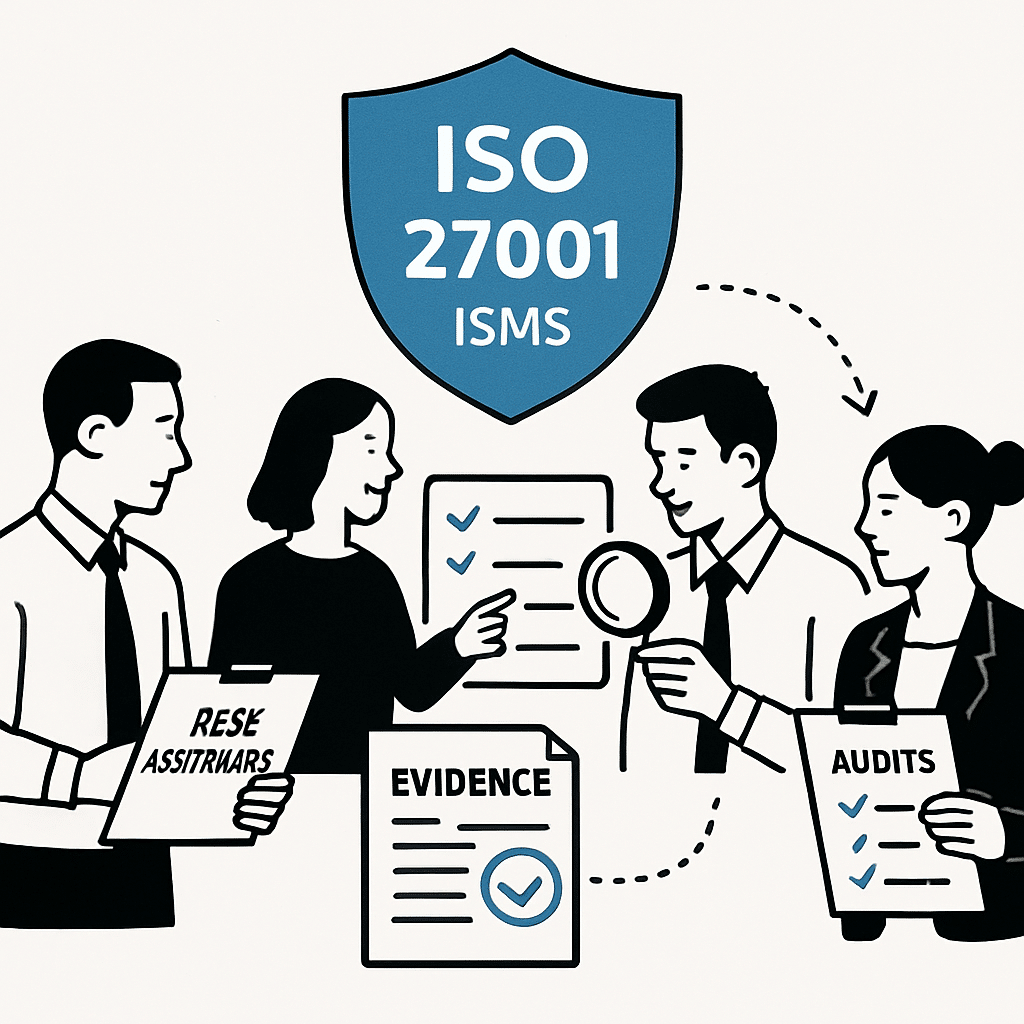
You do not need a large security team or a wall of binders to achieve ISO 27001 certification. What you need is focus, a realistic plan, and evidence that your information security management system works in practice. This guide breaks down the path from zero to certified into clear, small-team friendly steps you can start today.
Whether you are a startup closing enterprise deals or a lean IT team formalizing security, you will learn how to scope smartly, assess risk, select the right controls, document only what matters, and pass the audit with confidence.
Table of Contents
- What Is ISO 27001 and Why It Matters
- How Certification Works
- A Practical Roadmap for Small Teams
- Define Scope and Context
- Build Your ISMS Core
- Risk Assessment and Treatment
- Choose and Implement Controls
- Documentation and Evidence That Auditors Expect
- Run, Measure, Improve
- Prepare for the Certification Audit
- Tools, Templates, and Tips for Small Teams
- Common Pitfalls to Avoid
- Timeline and Costs Overview
- Conclusion and Next Steps
What Is ISO 27001 and Why It Matters
ISO 27001 is the international standard for establishing, operating, and continually improving an information security management system, often called an ISMS. It is risk based and technology agnostic. Rather than dictating tools, it requires you to identify risks to information and manage them with appropriate controls.
For small teams, certification can be a growth unlock. It builds customer trust, streamlines security questionnaires, reduces security incidents, and aligns people and processes. You do not need to boil the ocean. A focused scope, a simple risk process, and evidence of day to day control operation go a long way.
How Certification Works
Certification is delivered by an accredited certification body. The process typically includes:
- Stage 1 audit: A readiness and documentation review. The auditor checks your scope, policies, risk methodology, Statement of Applicability, and high level evidence that the ISMS is implemented.
- Stage 2 audit: A deeper test of effectiveness. The auditor samples controls, interviews staff, and reviews records to confirm that your ISMS is working as described.
- Surveillance audits: Shorter annual check ins to ensure you continue to meet the standard. Recertification usually occurs on a three year cycle.
The certificate includes your organization name and the defined scope. The Statement of Applicability remains an internal document, but auditors review it closely.
A Practical Roadmap for Small Teams
Use this lightweight roadmap to guide your effort. Adjust timelines to your pace; consistency matters more than speed.
Weeks 0 to 2: Mobilize and scope
- Secure leadership commitment and name an ISMS manager.
- Define the scope boundary and identify key interested parties.
- Draft your top level Information Security Policy.
Weeks 3 to 4: Inventory and risk method
- Build an asset inventory and data map.
- Define a simple risk assessment methodology and risk criteria.
- Set a few measurable information security objectives.
Weeks 5 to 8: Assess risks and select controls
- Run your first risk assessment and document results.
- Map risks to Annex A controls and draft your Statement of Applicability.
- Implement priority controls and quick wins, especially identity, access, backup, and incident basics.
Weeks 9 to 12: Operate and gather evidence
- Finalize procedures and start routine records like access reviews and backup checks.
- Deliver awareness training and run a tabletop incident drill.
- Conduct an internal audit and hold a management review.
Weeks 13 to 16: Close gaps and book Stage 1
- Resolve nonconformities from your internal audit.
- Confirm control operation over several weeks to build a trail of evidence.
- Select a certification body and schedule Stage 1, then Stage 2.
Define Scope and Context
Small teams win by scoping tightly. Certify the products, services, and locations that matter most for customers and risk. You can always expand later.
Steps to define scope
- Identify boundaries: Which products, cloud environments, offices, and teams are in scope. For many startups, this is the production cloud environment and supporting functions.
- Map interfaces: List key suppliers and integrations that influence security, such as cloud platforms, payment processors, and managed service providers.
- Document context: Internal and external issues that affect your ISMS, such as regulatory obligations, customer requirements, and technology constraints.
- Interested parties: Capture needs of customers, employees, regulators, and suppliers. Tie these to objectives and controls.
Write a Scope Statement that clearly describes what is included and excluded. Keep it specific and business focused.
Build Your ISMS Core
Your ISMS is a small set of linked practices and documents that steer how you manage risk and controls.
Core elements to create
- Information Security Policy: A concise, approved policy that sets direction and roles. One or two pages is fine for a small team.
- Roles and responsibilities: Name the ISMS manager, control owners, and asset owners. Use a simple RACI so duties are clear.
- Asset inventory and classification: List information assets such as data sets, code repositories, systems, and devices. Tag by sensitivity and owner.
- Objectives and metrics: Example objectives include reducing critical vulnerabilities, improving backup restore success, or shortening incident response time.
- Competence and awareness: Define required skills and schedule brief, recurring training.
Keep documentation lean. Build simple procedures that reflect how you actually work, not idealized process diagrams.
Risk Assessment and Treatment
Risk assessment is the engine of ISO 27001. It connects real threats to practical controls and helps you prioritize limited time.
Define your method
- Criteria: Set scales for likelihood and impact, with clear definitions.
- Risk acceptance: Decide what level of residual risk you can accept and who must approve.
- Process: Identify assets, threats, and existing controls; rate risk; choose treatment actions.
Run your first assessment
- Hold a short workshop with engineering, IT, and business leaders.
- Walk through top assets and scenarios such as credential theft, data loss, or service outage.
- Record risks in a simple register with owners and due dates.
- Decide treatment: avoid, reduce, transfer, or accept.
Auditors want to see a consistent method applied and tracked over time. They do not expect a risk novel. Clarity beats volume.
Choose and Implement Controls
Annex A of ISO 27001 aligns with ISO 27002 and groups controls into four themes: Organizational, People, Physical, and Technological. You select controls based on your risks and document choices in the Statement of Applicability.
Common small team control set
- Identity and access: Single sign on, strong MFA, least privilege, periodic access reviews, quick offboarding.
- Asset and device security: Inventory endpoints and servers, enforce disk encryption, screen lock, and automatic patching.
- Secure configuration and change: Baseline configs as code, peer review, separation of duties, and change logs.
- Vulnerability management: Routine scanning, prioritized remediation, and tracking to closure.
- Backup and recovery: Regular backups, offline or immutable where feasible, and tested restores.
- Logging and monitoring: Centralize critical logs, set alerts for auth failures and privilege changes, review summaries.
- Cryptography: TLS in transit, strong algorithms, key rotation, and secrets management.
- Supplier management: Risk based due diligence and security clauses in contracts.
- Incident management: Clear reporting, triage, roles, and a simple playbook; run a tabletop drill.
- Business continuity information security aspects: Define recovery objectives, test failover or restore for key services.
- Secure development: Secure coding guidelines, dependency scanning, and CI gates for critical checks.
- Awareness and acceptable use: Short training and a practical acceptable use policy.
Document how each selected control operates, who owns it, and what records demonstrate it. Keep it proportional to your risk and scale.
Documentation and Evidence That Auditors Expect
ISO 27001 requires specific documented information. Focus on creating documents you will actually use, and keep records as byproducts of your normal work.
Common required documents
- ISMS scope
- Information Security Policy
- Risk assessment and treatment process
- Risk assessment results and treatment plan
- Statement of Applicability
- Information security objectives and plans
- Competence and awareness records
- Monitoring and measurement results
- Internal audit program and reports
- Management review results
- Nonconformities and corrective actions
Evidence that is easy to collect
- Access review exports from your identity provider with sign off.
- Backup job logs and a screenshot of a successful restore test.
- Change tickets or pull requests showing peer review.
- Vulnerability scan reports and remediation notes.
- Incident drill notes with attendees and outcomes.
- Training completion reports and onboarding checklists.
Use simple naming, dates, and owners so you can retrieve evidence fast during audits. A shared folder with clear subfolders by control topic works well.
Run, Measure, Improve
ISO 27001 expects a living system. You monitor, measure, audit, and improve, not just write policies.
Monitoring and metrics
- Track a small set of indicators such as critical vulnerabilities open over time, failed backups, and phishing training results.
- Review metrics monthly and use them to steer actions.
Internal audit
- Audit your ISMS at planned intervals. The auditor must be independent of the area audited, but in small teams you can swap reviewers or use a part time consultant.
- Focus on sampling records and testing whether processes match your documented procedures.
Management review
- Hold at least one formal review per year. Include performance, incidents, audit results, risks, opportunities, and resource needs.
- Record decisions and actions; this is a key artifact for Stage 2.
Corrective actions
- When things go wrong, capture root cause, fix, and follow up. Keep it simple but consistent.
Prepare for the Certification Audit
Good preparation reduces stress and keeps the audit focused on facts.
Select the right certification body
- Choose an accredited body with experience in your industry and company size.
- Align on audit scope, locations, languages, and sampling approach.
Stage 1 readiness
- Ensure mandatory documents exist and are approved.
- Have a current risk register, a Statement of Applicability, and at least several weeks of control records.
- Be ready to discuss context, interested parties, and objectives.
Stage 2 success tips
- Brief your team on audit etiquette: answer what is asked, show evidence, do not speculate.
- Stage control walkthroughs with owners and sample evidence ready.
- Accept minor findings calmly; focus on corrective actions and improvement.
Remember that auditors are verifying effectiveness, not perfection. Demonstrating control over time and a culture of improvement is compelling.
Tools, Templates, and Tips for Small Teams
You can build a robust ISMS with tools you already use. Avoid complex platforms until you outgrow simple solutions.
Lightweight tool stack
- Documents and records: shared drive with clear folders and naming.
- Task tracking: your existing issue tracker to manage risks, actions, and audits.
- Identity and access: cloud identity provider with MFA and automated provisioning.
- Device management: built in OS management or lightweight mobile device management for encryption and patching.
- Logging: cloud provider logs or a simple log aggregator for critical events.
Templates to speed up
- Policy and procedure templates aligned to ISO 27001.
- Risk register and Statement of Applicability spreadsheets.
- Internal audit checklist mapped to your scope and controls.
Practical tips
- Write for operators. One page procedures with who, what, when, and where evidence is stored beat long manuals.
- Automate evidence where possible, such as scheduled exports and screenshots with timestamps.
- Run short, regular cadences: weekly control checks and monthly metrics reviews keep you audit ready all year.
Common Pitfalls to Avoid
- Over scoping: Certifying every system on day one stretches small teams. Start with your core service.
- Policy without practice: Auditors will ask for records. If you cannot show it, it did not happen.
- Tool first thinking: Buy later. Prove your process with existing tools, then upgrade if needed.
- No internal audit: Skipping this step is a common cause of stage delays.
- Underestimating suppliers: Unmanaged third parties introduce risk. Do basic due diligence and add security clauses.
- Last minute evidence gathering: Build records continuously to avoid a pre audit scramble.
Timeline and Costs Overview
With focus, many small teams achieve certification in three to six months. Your timeline depends on starting maturity, scope size, and control implementation lead times.
Typical timeline
- Design and implement ISMS: 8 to 12 weeks for a focused scope.
- Operate and collect evidence: 4 to 8 weeks to show consistent control operation.
- Stage 1 and Stage 2 audits: scheduled availability and 2 to 5 audit days combined, depending on scope and headcount.
Cost considerations
- Certification body fees vary by size and scope; expect day rates plus administrative costs.
- Internal time is the largest investment. Assign clear owners and keep meetings short and purposeful.
- Optional support such as gap assessments or virtual internal auditors can help small teams accelerate.
You do not need expensive extras to certify. Evidence of effective controls, not fancy tools, earns the certificate.
Conclusion and Next Steps
ISO 27001 rewards teams that keep things simple and consistent. Scope narrowly, assess risk with a clear method, select proportionate controls, and build a rhythm of records, audits, and reviews. That is the heart of certification.
Your next step: appoint an ISMS lead, draft your scope and policy this week, and schedule a one hour risk workshop. Start small, document what you do, and improve with each cycle. Certification will follow.
Frequently Asked Questions
How long does ISO 27001 certification take for a small team
Commonly three to six months for a focused scope, assuming basic controls exist. Plan several weeks of steady control operation before Stage 2 so you have evidence over time.
Do we need a consultant to certify
No. Many small teams succeed without one. A consultant can accelerate gap closure or perform an independent internal audit, but the certification body audits your ISMS performance, not who wrote your documents.
Is a penetration test required
ISO 27001 does not explicitly mandate penetration tests, but vulnerability management and testing appropriate to risk are expected. Many teams run at least annual tests for critical systems.
What is the difference between ISO 27001 and ISO 27002
ISO 27001 is the certifiable management system standard with requirements. ISO 27002 provides implementation guidance for controls referenced in Annex A. You certify to 27001, using 27002 to help design controls.
Leave a Reply