
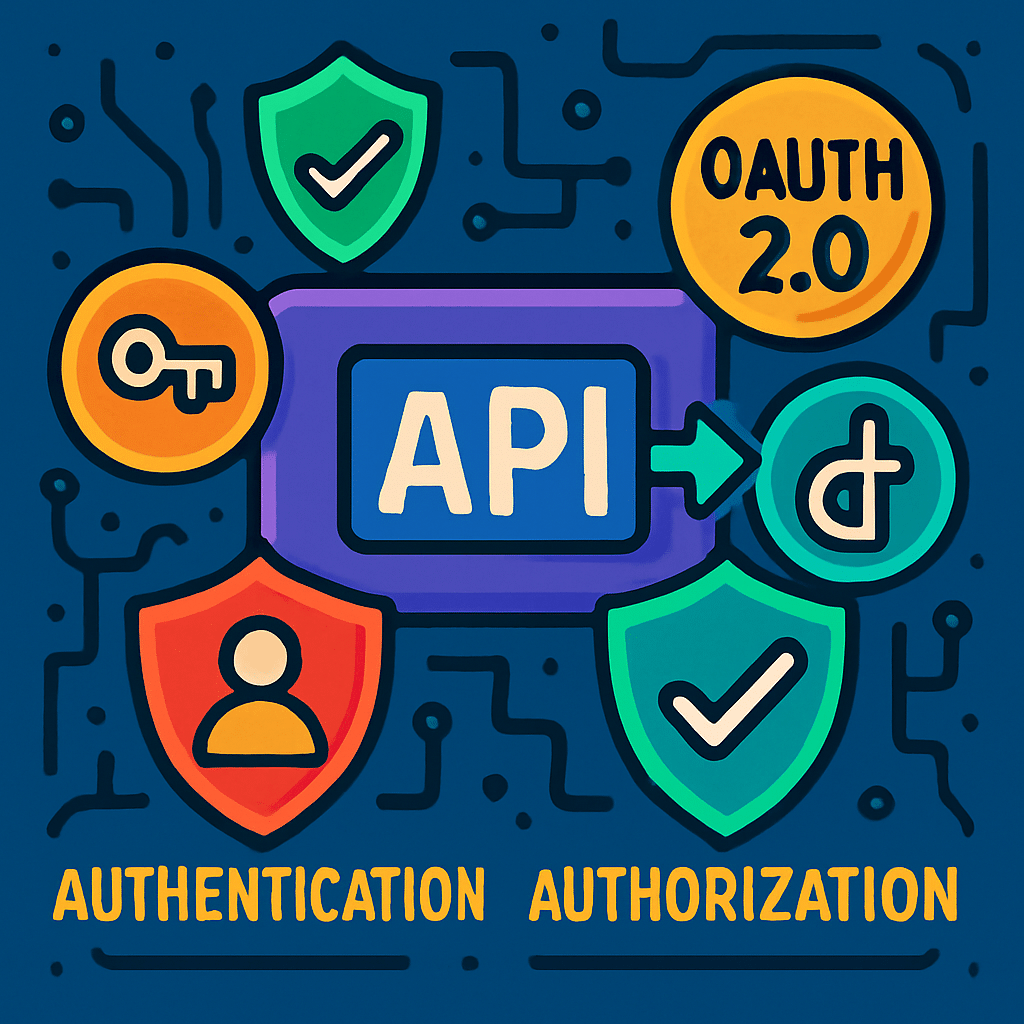
Every API request is a tiny act of trust. When authentication and authorization are weak, that trust breaks, data leaks, and systems fail. Strong identity controls are not optional for modern platforms; they are the backbone of secure, reliable, and compliant APIs.
This guide explains practical best practices for API authentication and authorization. It is written for a general audience with a professional lens, focusing on clarity and real-world implementation tips you can apply today.
Table of Contents
- Understanding Authentication vs. Authorization
- Principles for Designing Secure API Identity
- Token Strategies: OAuth 2.0, OIDC, and JWTs
- Session Management and Token Storage
- Protecting Credentials and Secrets
- Access Control: Scopes, Roles, and ABAC
- API Gateway and Edge Security Controls
- Transport and Data Layer Protections
- Monitoring, Auditing, and Threat Detection
- Testing, Hardening, and Compliance
- Common Pitfalls and How to Avoid Them
- Implementation Checklist
- Conclusion
- Frequently Asked Questions
Understanding Authentication vs. Authorization
Authentication proves who a caller is. Authorization decides what that caller can do. Mixing them up leads to subtle and dangerous flaws. Treat identity and access as separate, cooperating systems.
In APIs, authentication is typically handled via tokens issued by an identity provider. Authorization evaluates those tokens, plus request context, against access rules. Strong designs preserve this separation, making the system easier to reason about and test.
Why it matters
- Clear boundaries reduce complexity and misconfigurations.
- Independent evolution: you can improve access control without reworking login flows.
- Better auditing: it is easier to trace who did what and why.
Principles for Designing Secure API Identity
Principles guide choices when tradeoffs appear. Use these to anchor decisions:
- Least privilege: default to deny; grant the minimal access necessary.
- Zero trust: never implicitly trust the network or a client. Verify every request.
- Standards first: prefer well-vetted protocols like OAuth 2.0 and OpenID Connect.
- Do not roll your own crypto: rely on proven libraries and managed services.
- Short-lived credentials: limit blast radius with tight expirations and rotation.
- Observability: design for auditability and anomaly detection from day one.
Token Strategies: OAuth 2.0, OIDC, and JWTs
Tokens carry identity and authorization decisions to your API. Choose formats and flows that match your risk profile and client types.
Picking OAuth 2.0 grant types
- Authorization Code with PKCE: recommended for browsers and mobile. Protects against code interception.
- Client Credentials: for server-to-server calls where no user is present. Scope tightly by service role.
- Device Code: for devices with limited input. Still pair with short-lived access tokens.
OIDC and user identity
OpenID Connect layers identity on top of OAuth. It provides an ID token conveying who the user is, plus optional profile claims. Use it when APIs need to act on behalf of users rather than just services.
JWTs vs opaque tokens
- JWTs: self-contained, signed tokens. Fast to validate, no DB lookup. Risks include oversized tokens and difficulty with rapid revocation.
- Opaque tokens: random references. Require introspection at an auth server. Enable straightforward revocation and fine-grained session control.
JWT best practices
- Use strong signing algorithms (for example, RS256 or ES256). Never allow alg none.
- Validate issuer, audience, not before, and expiration on every request.
- Set short expirations (for example, 5 to 15 minutes) and rotate refresh tokens.
- Pin keys by kid and fetch through a JWKS endpoint with caching.
- Avoid putting sensitive PII in access tokens; prefer back-end lookups when needed.
- For higher sensitivity, consider JWE (encrypted) or opaque tokens with introspection.
See the OAuth 2.1 discussions for safer default patterns: oauth.net/2.1
Session Management and Token Storage
How and where tokens live matters as much as how they are minted. Storage decisions can make or break your threat model.
Token lifetime and rotation
- Access tokens: short-lived to limit replay.
- Refresh tokens: rotate on use and detect reuse to flag theft.
- Provide secure revocation endpoints and propagate revocation quickly.
Client storage patterns
- Browsers: use secure, httpOnly, sameSite=strict cookies when possible. Avoid long-term storage in localStorage for sensitive tokens.
- SPAs: store tokens in memory and refresh often; pair with backend for frontend to handle cookies and CSRF.
- Mobile: store secrets in OS-managed keystores (Keychain or Keystore) with device binding where possible.
- Servers: keep tokens in volatile memory only; avoid writing to logs or crash dumps.
Stateful vs stateless sessions
- Stateless: JWTs verified by resource servers; minimize claims and expiry.
- Stateful: opaque tokens with introspection enabling immediate revocation and risk-based controls.
Protecting Credentials and Secrets
Compromised secrets are a primary incident driver. Treat every credential as valuable, even in non-production environments.
- Use a centralized secrets manager or vault; never hard-code secrets or commit them to repos.
- Rotate keys regularly; automate rotation for long-lived credentials and API keys.
- Hash passwords with strong algorithms (Argon2id or bcrypt with high cost).
- Prefer mTLS for service-to-service auth in private networks; manage certificates with automated issuance and renewal.
- Protect build pipelines; sign artifacts and verify signatures at deploy time.
- Scope API keys with explicit permissions and expiration; avoid global keys.
Review OWASP cheat sheets for handling secrets: cheatsheetseries.owasp.org
Access Control: Scopes, Roles, and ABAC
Authorization translates business rules into enforceable policies. Clear models prevent privilege creep and ambiguous decisions.
Modeling access
- Scopes: describe what actions are permitted; include them in tokens.
- Roles: collections of permissions for typical personas or services.
- ABAC: attribute-based control evaluates user, resource, and context attributes.
- ReBAC: relationship-based control captures who can access which resource via graph relationships.
Practical tips
- Start with least-privilege scopes and grow as needed.
- Design for tenancy isolation; include tenant identifiers in tokens and enforce at resource level.
- Centralize policy evaluation where possible using a policy engine such as OPA; cache decisions carefully with TTLs.
- Return standardized error codes without leaking policy details.
API Gateway and Edge Security Controls
Edge controls block commodity attacks before they hit your app. Let gateways handle cross-cutting concerns and keep services simple.
- Rate limiting and quotas by token, IP, and route.
- WAF rules for common injection and deserialization patterns.
- mTLS between gateway and services for identity assurance.
- Header normalization and strict CORS for browser-facing APIs.
- Schema validation and size limits to prevent resource abuse.
- Bot and DDoS protections with progressive challenges.
Transport and Data Layer Protections
Encryption in transit and at rest is table stakes. Apply modern defaults and remove legacy risks.
- TLS 1.2 or higher, strong ciphers, HSTS on public endpoints.
- Certificate pinning for mobile and desktop apps where appropriate.
- Encrypt sensitive fields at rest; minimize data collection and retention.
- Use idempotency keys on mutation endpoints to curb replay and double-spend bugs.
- Implement nonce or timestamp checks for signed request flows.
- Return generic errors; avoid leaking internal details in responses.
Monitoring, Auditing, and Threat Detection
You cannot defend what you cannot see. Build identity-aware observability into the platform.
- Structured logs with request IDs, subject identifiers, scopes, and decision outcomes.
- Audit trails for authentication events, token issuance, revocation, and admin actions.
- Alert on anomalies: spikes in failed logins, scope escalations, or token reuse events.
- Feed logs to a SIEM; correlate with endpoint and infrastructure telemetry.
- Protect privacy; mask sensitive data and enforce retention policies.
Testing, Hardening, and Compliance
Security is a lifecycle, not a one-time setup. Bake testing into development and operations.
- Threat model flows and data paths; identify trust boundaries and abuse cases.
- Automate SAST, DAST, dependency scanning, and secret scanning in CI.
- Use contract tests to verify token validation, claims, and error handling.
- Fuzz API inputs and run chaos experiments for auth and rate limits.
- Align with OWASP ASVS and API Security Top 10; document controls for audits.
- Map controls to SOC 2, ISO 27001, and privacy regs such as GDPR where applicable.
Explore OWASP API Security Top 10: owasp.org/API-Security
Common Pitfalls and How to Avoid Them
- Accepting any token signed by any issuer. Always validate issuer and audience.
- Long-lived access tokens without rotation. Keep tokens short and rotate refresh tokens.
- Storing tokens in localStorage in browsers. Prefer httpOnly cookies or in-memory storage.
- Skipping CSRF protections when using cookies. Implement sameSite and CSRF tokens.
- Overbroad scopes or wildcard permissions. Start narrow and evolve deliberately.
- Verbose error messages that expose internals. Keep responses minimal.
- Failing to check token revocation or reuse. Introspect or track jti identifiers.
- Clock skew not handled. Allow small leeway but never ignore expiry.
Implementation Checklist
- Choose identity patterns: OIDC for users, client credentials for services.
- Decide token format per risk: JWT for speed, opaque for simple revocation.
- Configure short access token TTLs; implement refresh rotation and reuse detection.
- Validate tokens on every request: signature, issuer, audience, time claims.
- Define scopes and roles; document which endpoints require which permissions.
- Centralize policy decisions where possible; cache with strict TTLs.
- Harden storage: cookies with httpOnly and sameSite, mobile keystores, no logs.
- Protect secrets in a vault; automate key rotation and mTLS certificate renewal.
- Enforce gateway controls: rate limits, schema validation, WAF, and CORS.
- Enable TLS 1.2+, HSTS, and request signing or nonces for sensitive flows.
- Instrument logs with identity context; wire alerts and dashboards.
- Automate security testing; track findings and remediation SLAs.
- Review against OWASP guidance and compliance requirements before launch.
Conclusion
Secure APIs are built on strong identity. Separate authentication from authorization, prefer standards, keep tokens short-lived, and enforce least privilege. Edge protections, robust storage, and careful monitoring close the loop.
Adopt a roadmap: start with safe defaults, instrument everything, and iterate. With the practices above, your APIs will be resilient against common attacks and ready to scale with confidence.
Frequently Asked Questions
Do I need OAuth for every API?
No. For internal service-to-service calls, mutual TLS or signed requests may suffice. For user-facing and third-party integrations, OAuth 2.0 and OIDC are recommended.
Should I use JWT or opaque tokens?
Use JWTs for low-latency validation across many services, with short TTLs. Use opaque tokens when you need straightforward revocation, device binding, or dynamic risk checks via introspection.
How long should access tokens live?
Keep access tokens short, typically 5 to 15 minutes. Pair with refresh tokens that rotate on use and implement reuse detection to spot theft.
What is the difference between scopes and roles?
Scopes describe specific permissions included in a token. Roles are collections of permissions assigned to users or services. Use scopes for API checks and roles to simplify assignments.
Leave a Reply