
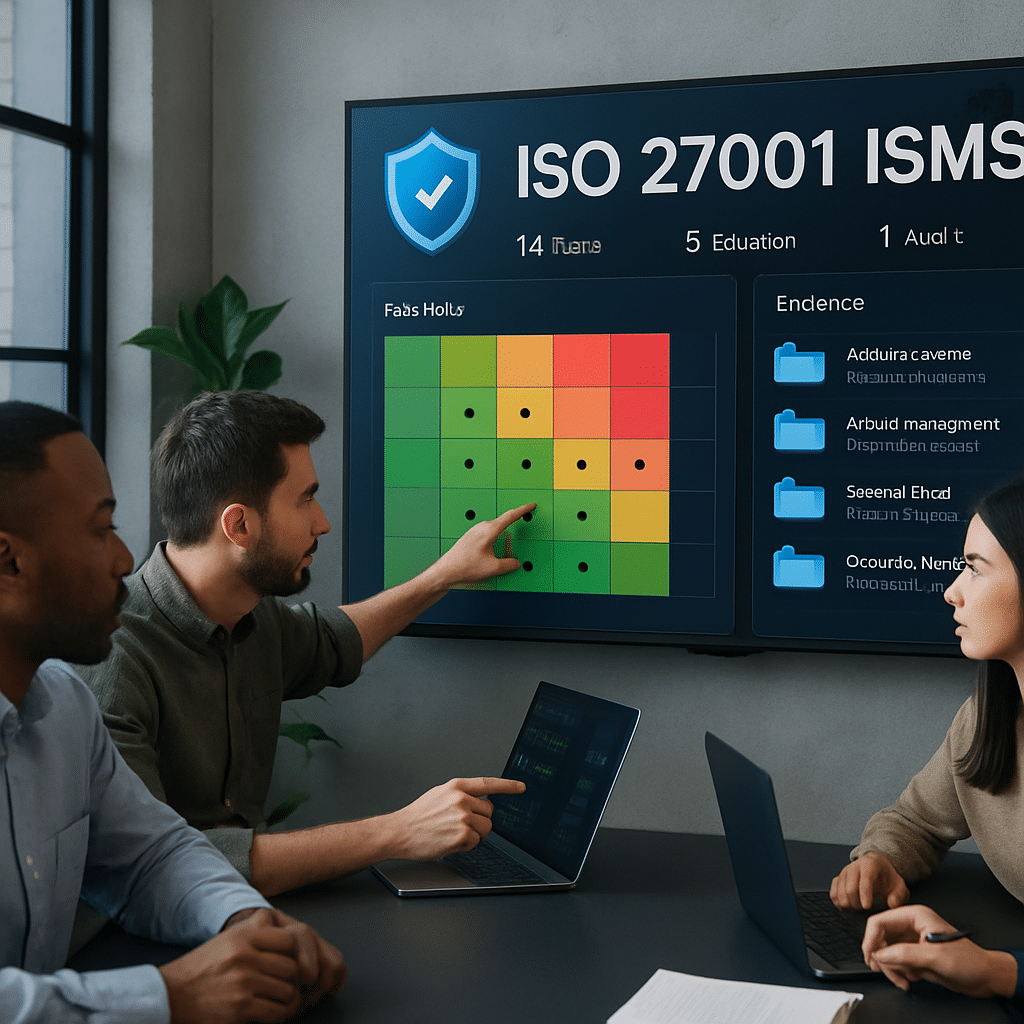
Preparing for an ISO 27001 audit can feel daunting—especially for a fast-moving startup juggling product milestones, customers, and hiring. The good news: with a clear plan and the right artifacts, you can turn audit day from a high-stress event into a confident showcase of your security maturity. This guide walks you through practical, startup-friendly steps to get audit-ready without derailing your roadmap.
We’ll cover scope, risk, evidence, internal audits, what to expect from the auditor, and the most common pitfalls to avoid. Whether you’re pursuing certification to win enterprise deals, meet regulatory expectations, or build trust, these tips will help you prepare efficiently and effectively.
Table of Contents
- Why ISO 27001 Matters for Startups
- Understanding the Audit: Stage 1 vs. Stage 2
- Define Your Scope and Context
- Build Your ISMS Foundation
- Risk Assessment and Treatment
- Select Controls and Document What You Do
- Evidence and Recordkeeping
- Training and Security Awareness
- Vendor and SaaS Risk Management
- Internal Audit and Gap Closing
- Management Review and Objectives
- Pre-Audit Checklist and Timeline
- Audit-Day Best Practices
- Post-Audit Follow-Up
- Common Pitfalls to Avoid
- Helpful Tools and Templates
- Conclusion
- Frequently Asked Questions
Why ISO 27001 Matters for Startups
Trust, growth, and resilience
ISO 27001 is the globally recognized standard for building and maintaining an Information Security Management System (ISMS). For startups, certification signals that you protect customer data, manage risk, and operate with discipline. That builds trust with enterprise buyers and accelerates security reviews.
Beyond sales, an ISMS helps you scale responsibly. You’ll formalize how you do security—policies, processes, and evidence—so your growing team can follow consistent practices. The result is fewer surprises, faster incident response, and a healthier security culture.
Understanding the Audit: Stage 1 vs. Stage 2
Two stages, one outcome
An accredited certification body performs your audits in two parts:
- Stage 1 (Documentation Review): The auditor checks your ISMS scope, mandatory documents (like your Statement of Applicability), and readiness. Gaps identified here should be closed before Stage 2.
- Stage 2 (Implementation and Effectiveness): The auditor tests that you follow your policies, controls operate as described, and evidence exists. They’ll interview staff, sample records, and observe processes.
After certification, expect annual surveillance audits and a full recertification audit every three years. Your goal is a living ISMS, not a one-time project.
Define Your Scope and Context
Set clear boundaries
Scope drives everything: what systems, locations, teams, and services are “in.” Keep it accurate, practical, and aligned with business priorities.
- Include the product(s), customer data flows, and enabling infrastructure that matter to customers.
- Exclude areas that are irrelevant or out of your control—but justify exclusions.
- Document context: stakeholders, legal/regulatory requirements, and information types handled.
Tip: Map your data flow from capture to deletion. Use it to validate scope, identify assets, and spot vendor dependencies.
Build Your ISMS Foundation
Policies, roles, and document control
Your ISMS is the framework that ties security to your business. Start with a lean but complete set of policies and procedures that match how you actually work.
- Core policies: Information Security, Access Control, Asset Management, Secure Development, Incident Management, Business Continuity, Vendor Management, and Acceptable Use.
- Roles and responsibilities: Name an ISMS owner, define key roles (e.g., incident manager, change approver), and avoid single points of failure.
- Document control: Track versions, approvals, and review dates. Keep policies where people can find them.
Keep it pragmatic. Overly complex policies waste time and fail audits when they’re not followed.
Risk Assessment and Treatment
Make risk your compass
ISO 27001 is risk-driven. Choose a simple, repeatable methodology and apply it consistently.
- Identify assets, threats, and vulnerabilities; rate likelihood and impact using a defined scale.
- Record risks in a register with owners, treatment options, and due dates.
- Define risk appetite and acceptance criteria so decisions are traceable.
- Produce a treatment plan with specific control actions tied to timelines.
Auditors look for a clear line from risk to control to evidence. If a risk is accepted, show the rationale and approval.
Select Controls and Document What You Do
From Annex A to your Statement of Applicability
Annex A lists control objectives. You decide which apply based on your risks and context, then justify inclusions and exclusions in your Statement of Applicability (SoA).
- Map each selected control to the relevant policy/procedure and the evidence you’ll present.
- Use real-world examples: MFA enforcement, CI/CD security checks, vulnerability management cadence, and backup testing.
- Keep the SoA current as your environment or risks change.
Clarity beats volume: concise, accurate procedures beat long, unused playbooks.
Evidence and Recordkeeping
Prove it with artifacts
Evidence is anything that shows a control exists and works: logs, screenshots, tickets, reports, meeting minutes, and training records. Create an organized trail.
- Centralize evidence in a shared drive or GRC tool with read-only permissions.
- Adopt naming conventions: YYYY-MM-DD_ControlName_ArtifactType (e.g., 2025-03-10_VulnMgmt_ScanReport.pdf).
- Automate where possible: export access review reports, pipeline security scans, and patching dashboards.
- Keep samples ready: last two patch cycles, three change tickets, one incident postmortem, latest vendor reviews.
Tip: Build an “evidence map” that links each SoA control to specific files. It speeds audit day and reduces scramble.
Training and Security Awareness
Make people your first control
Startups move fast; people make mistakes. Training reduces risk and satisfies multiple controls.
- Provide onboarding security training within the first week; refresh annually.
- Offer role-based modules (e.g., secure coding for engineers, data handling for support).
- Run phishing simulations or awareness campaigns; track participation.
- Record completions and quiz scores; retain certificates where available.
Keep content short and relevant. Reinforce through Slack reminders, engineering checklists, and code review templates.
Vendor and SaaS Risk Management
Control the extended attack surface
Most startups rely heavily on SaaS. Auditors expect a vendor program proportional to your risk.
- Inventory vendors, classify criticality, and document data shared and region of storage.
- Collect assurance artifacts (e.g., ISO 27001 or SOC 2 reports), review them annually, and track open items.
- Use DPAs and security addenda; verify shared responsibility for cloud services.
- Define onboarding, monitoring, and offboarding steps with owners and timelines.
Practical tip: Start with your top 10 high-risk vendors and expand from there.
Internal Audit and Gap Closing
Test before the test
An internal audit checks that your ISMS conforms to ISO 27001 and your own procedures. It should be independent: use someone outside the process, a qualified contractor, or a peer from another team.
- Scope the internal audit against your ISMS and SoA; sample evidence like an external auditor would.
- Record nonconformities and observations; assign corrective actions with due dates.
- Verify fixes and keep proof. Auditors want to see a closed-loop process.
Schedule the internal audit at least 4–6 weeks before Stage 2 to allow time for remediation.
Management Review and Objectives
Leadership sets the tone
ISO 27001 requires leadership involvement. Hold a formal management review and document it.
- Discuss ISMS performance: KPIs, incidents, audits, customer issues, and resource needs.
- Set measurable security objectives (e.g., patching SLA adherence, training completion, MTTR for incidents).
- Record decisions, action items, and owners in meeting minutes.
Auditors will ask for evidence that leadership is engaged and the ISMS drives continual improvement.
Pre-Audit Checklist and Timeline
90 / 60 / 30-day plan
Work backward from your planned audit window.
- 90 days out: Freeze scope; finalize policies; complete risk assessment and SoA; start evidence map.
- 60 days out: Perform internal audit; remediate gaps; complete vendor reviews; run training refreshers.
- 30 days out: Conduct management review; validate evidence freshness; run a mock audit interview.
- 1 week out: Share a document set with the auditor if requested; align calendars; brief your team.
Create a “war room” folder with the SoA, risk register, key procedures, and top evidence artifacts for quick access.
Audit-Day Best Practices
Be prepared, be honest, be concise
Treat the audit like a structured tour of your ISMS.
- Designate a host to manage the agenda and questions, plus SMEs for key domains (e.g., DevOps, Support).
- Answer directly, show evidence, and avoid speculation. If you don’t know, say so and follow up.
- Use screen sharing for live demonstrations (logs, CI/CD checks, ticket histories) and provide redacted samples if needed.
- Timebox deep dives; keep discussions aligned to scope and controls.
Remember: the auditor’s goal is to verify effectiveness, not to surprise you. Clear, consistent evidence wins the day.
Post-Audit Follow-Up
Close the loop
If the auditor raises nonconformities, they’ll be classified as major or minor. You’ll need a root cause analysis and a corrective action plan with deadlines, owners, and evidence of effectiveness.
- Document corrective actions in your ISMS tracker; attach evidence as you complete tasks.
- Update the risk register and SoA if controls change.
- Communicate outcomes to stakeholders and use lessons learned to strengthen your ISMS.
Continuous improvement isn’t just a requirement—it’s how your ISMS stays valuable as your startup evolves.
Common Pitfalls to Avoid
Learn from what trips teams up
- Scope that’s too broad: Include only what you can control and prove.
- Policies that don’t match practice: If you say you do monthly access reviews or quarterly DR tests, have evidence.
- No evidence trail: Activities happened but weren’t recorded. If it’s not documented, it didn’t happen.
- Ignoring vendors: Third parties can be your biggest risk. Show diligence and monitoring.
- Overengineering: Complex procedures burn time and create audit gaps. Favor simple and reliable.
Helpful Tools and Templates
Start small, automate smart
- Evidence tracker: A spreadsheet linking SoA controls to specific artifacts and storage paths.
- Risk register template: Columns for asset, threat, vulnerability, likelihood, impact, risk rating, owner, treatment, due date.
- Policy templates: Adapt reputable open-source or vendor templates to reflect your actual processes.
- Automation: Use CI/CD checks, cloud posture tools, and SSO reports to produce repeatable evidence.
- Ticketing: Log access reviews, change approvals, and incidents to create an auditable trail.
Whether you use a GRC platform or a well-organized drive, consistency is what matters most.
Conclusion
ISO 27001 certification isn’t about perfect security—it’s about a disciplined, risk-based system you can prove. Define a right-sized scope, tie controls to risks, and maintain a clean evidence trail. Run an honest internal audit, engage leadership, and prepare your team for clear, concise conversations.
Do that, and audit day becomes an opportunity to demonstrate maturity to customers, investors, and your own team. Start now, keep it simple, and build momentum. Your future self—and your sales pipeline—will thank you.
Frequently Asked Questions
How long does ISO 27001 certification take for a startup?
Most startups take 3–6 months to build or formalize their ISMS and 4–8 weeks to complete Stage 1 and Stage 2 audits, depending on scope and readiness.
What are the must-have documents for Stage 1?
At minimum: ISMS scope, key policies, risk assessment and treatment plan, Statement of Applicability, evidence of document control, internal audit results, and management review minutes.
Do we need every Annex A control?
No. You select controls based on your risks and context. Justify inclusions and exclusions in the Statement of Applicability and ensure effective implementation of selected controls.
Can a small startup pass without a dedicated security team?
Yes. Assign clear roles, keep procedures simple, automate evidence where possible, and show leadership commitment. Many early teams succeed with part-time ISMS ownership.
Leave a Reply